Platform comparison
| Platform | YES odds | NO odds | Fee | KYC | Settlement | |
|---|---|---|---|---|---|---|
Polymarket (via Trump Prediction) Pick polygram.ink (preferred broker) |
14% | 86% | 0% (USDC on-chain) | No-KYC up to $1,500 | USDC, auto via UMA oracle | Live odds → |
Polymarket (direct) polymarket.com |
14% | 86% | 0% | Geo-blocked in US/UK/EU | USDC, on-chain | Live odds → |
Kalshi kalshi.com |
— | — | Up to 7% per trade | US-only, KYC required | USD | Live odds → |
Betfair Exchange betfair.com |
— | — | 2-5% commission | Full KYC from first trade | GBP / EUR | Live odds → |
Manifold Markets manifold.markets |
— | — | Play-money (mana) | None — play-money | Mana (no cash-out) | Live odds → |
Outcome probabilities
Current market-implied probability for each outcome, from the live order book.
| Outcome | Probability |
|---|---|
| Sudan's Emergency Response Rooms | 14% |
| Save the Children | 12% |
| Yulia Navalnaya | 7% |
| International Court of Justice | 5% |
| UNRWA | 4% |
| Committee to Protect Journalists | 4% |
| Donald Trump | 2% |
| Volodymyr Zelenskyy | 2% |
| Chow Hang-tung | 2% |
| Pope Leo XIV | 1% |
| Julian Assange | 1% |
| Greta Thunberg | 1% |
| António Guterres | 1% |
| Tamim bin Hamad Al Thani | 1% |
| Ahmed al-Sharaa | 1% |
| Narendra Modi | 1% |
| Sviatlana Tsikhanouskaya | 1% |
| Reporters Without Borders | 1% |
| ICRC | 1% |
| World Central Kitchen | 1% |
| Sara Al-Saqqa | 1% |
| Elon Musk | 0% |
| Vladimir Putin | 0% |
| Khaled Mashal | 0% |
| Benjamin Netanyahu | 0% |
| Recep Tayyip Erdoğan | 0% |
| Xi Jinping | 0% |
| Charlie Kirk | 0% |
| Mohammed bin Salman | 0% |
| UNHCR | 0% |
| Hussam Abu Safiya | 0% |
| Person L | 0% |
| Person M | 0% |
| Person N | 0% |
| Person O | 0% |
| Person P | 0% |
| Person Q | 0% |
| Person R | 0% |
| Person S | 0% |
| Person T | 0% |
| Person U | 0% |
| Person V | 0% |
| Person W | 0% |
| Person X | 0% |
| Person Y | 0% |
| Person Z | 0% |
| Person AA | 0% |
| Person AB | 0% |
| Person AC | 0% |
| Person AD | 0% |
| Person AE | 0% |
| Person AF | 0% |
| Person AG | 0% |
| Person AH | 0% |
| Person AI | 0% |
| Person AJ | 0% |
| Person AK | 0% |
| Person AL | 0% |
| Person AM | 0% |
| Person AN | 0% |
| Person AO | 0% |
| Person AP | 0% |
| Person AQ | 0% |
| Person AR | 0% |
| Person AS | 0% |
| Person AT | 0% |
| Person AU | 0% |
| Person AV | 0% |
| Person AW | 0% |
| Person AX | 0% |
| Other | 0% |
Market context
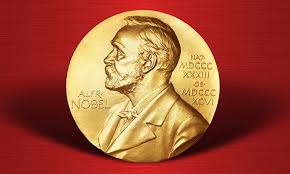
Nobel Peace Prize Winner 2026. The market is currently pricing the outcome at 2% YES, meaning crowd-implied probability sits at that level. Settlement is scheduled for 2026-10-10T00:00:00Z. Unlike a sportsbook, the price you see is set by buyers and sellers competing in a live order book — there is no house edge or bookmaker margin to fade.
World-affairs prediction markets price discrete geopolitical outcomes — ceasefires, treaty signings, leadership transitions — and tend to drift on rumour and snap-correct on official announcements.
Watch for the underlying catalysts that move this category: each official announcement, dataset release, or scheduled milestone generally produces a step change in the implied probability. Trades execute instantly on Polygon, and shares pay $1 each at resolution if your side wins.
Methodology
This page tracks Nobel Peace Prize Winner 2026 across four political prediction venues. Live odds come from the Polymarket order book (the deepest political prediction-market book). Kalshi is the CFTC-regulated US alternative, Betfair the established UK sports-exchange with politics markets, Manifold the open play-money variant. For users geo-blocked from Polymarket directly, brokers like Trump Prediction provide a 0%-fee route into the same order book.
Resolution & payout
Political markets typically settle on official candidate or agency confirmation. Polymarket uses UMA Optimistic Oracle: a proposer posts the outcome with a bond, the two-hour window opens, then the smart contract pays USDC.
Kalshi settles USD via CFTC clearinghouse, with clearly defined resolution sources (e.g. AP race calls for elections). Betfair settles after the official outcome is registered with the league or agency. Manifold is play-money.
UK Frequently Asked Questions
- How accurate are political prediction markets?
- Historically more accurate than polls. Polymarket's Brier score on US 2024 elections was ~0.11 — better than 538 (~0.14) and every mainstream poll. Markets aggregate information with real skin in the game.
- Can prediction markets influence election outcomes?
- Markets reflect expectations rather than create them. Studies show public-facing markets can anchor expectations, but don't influence the underlying outcome. Political markets are information, not advocacy.
- Are political prediction markets legal in my country?
- It varies. They sit in legal gray areas in most jurisdictions. Polymarket is geo-blocked from US/UK/EU; some broker frontends have a different geo footprint. Trade only with capital you can afford to lose, and only if you understand the legal status in your jurisdiction.
- Why do Polymarket and Kalshi differ on elections?
- Kalshi must follow CFTC compliance — strict definitions, clear resolution sources, US citizens only with KYC. Polymarket operates globally without CFTC oversight — deeper liquidity, but also higher regulatory risk.
- Are UK election prediction markets available from the UK?
- Yes. Betfair Exchange and Smarkets offer UKGC-regulated UK election markets (seat counts, party share, constituency results). Polymarket also lists UK election contracts with deeper global liquidity. Betfair winnings are typically tax-free for UK individuals; Polymarket profits are subject to HMRC CGT.
%22%2F%3E%3Cpath%20d%3D%22M%206%2066%20A%2026%2026%200%200%201%2058%2066%22%20fill%3D%22%23E6B98D%22%20opacity%3D%220.9%22%2F%3E%3Ccircle%20cx%3D%2232%22%20cy%3D%2226%22%20r%3D%2222%22%20fill%3D%22%23F5CBA7%22%2F%3E%3Crect%20x%3D%2210%22%20y%3D%224%22%20width%3D%2244%22%20height%3D%2214%22%20rx%3D%227%22%20fill%3D%22%23fbbf24%22%20opacity%3D%220.9%22%2F%3E%3Crect%20x%3D%228%22%20%20y%3D%2218%22%20width%3D%228%22%20%20height%3D%2218%22%20rx%3D%224%22%20fill%3D%22%23fbbf24%22%20opacity%3D%220.7%22%2F%3E%3Crect%20x%3D%2248%22%20y%3D%2218%22%20width%3D%228%22%20%20height%3D%2218%22%20rx%3D%224%22%20fill%3D%22%23fbbf24%22%20opacity%3D%220.7%22%2F%3E%3C%2Fsvg%3E) and
and%22%2F%3E%3Cpath%20d%3D%22M%206%2066%20A%2026%2026%200%200%201%2058%2066%22%20fill%3D%22%23E6B98D%22%20opacity%3D%220.9%22%2F%3E%3Ccircle%20cx%3D%2232%22%20cy%3D%2226%22%20r%3D%2222%22%20fill%3D%22%23F5CBA7%22%2F%3E%3Cpath%20d%3D%22M%2010%2018%20Q%2016%204%2026%2010%20Q%2020%202%2032%206%20Q%2044%202%2038%2010%20Q%2048%204%2054%2018%22%20stroke%3D%22%23fbbf24%22%20stroke-width%3D%224%22%20fill%3D%22none%22%20stroke-linecap%3D%22round%22%2F%3E%3C%2Fsvg%3E)
Trade Nobel Peace Prize Winner 2026 on Trump Prediction
Live order book, 0% fees, USDC settlement in seconds.
Open live market →