Platform comparison
| Platform | YES odds | NO odds | Fee | KYC | Settlement | |
|---|---|---|---|---|---|---|
Polymarket (via Trump Prediction) Pick polygram.ink (preferred broker) |
87% | 13% | 0% (USDC on-chain) | No-KYC up to $1,500 | USDC, auto via UMA oracle | Live odds → |
Polymarket (direct) polymarket.com |
87% | 13% | 0% | Geo-blocked in US/UK/EU | USDC, on-chain | Live odds → |
Kalshi kalshi.com |
— | — | Up to 7% per trade | US-only, KYC required | USD | Live odds → |
Betfair Exchange betfair.com |
— | — | 2-5% commission | Full KYC from first trade | GBP / EUR | Live odds → |
Manifold Markets manifold.markets |
— | — | Play-money (mana) | None — play-money | Mana (no cash-out) | Live odds → |
Outcome probabilities
Current market-implied probability for each outcome, from the live order book.
| Outcome | Probability |
|---|---|
| December 31, 2026 | 87% |
| December 31 | 0% |
| November 30 | 0% |
| March 31, 2026 | 0% |
| February 28, 2026 | 0% |
| June 30, 2026 | 0% |
Market context
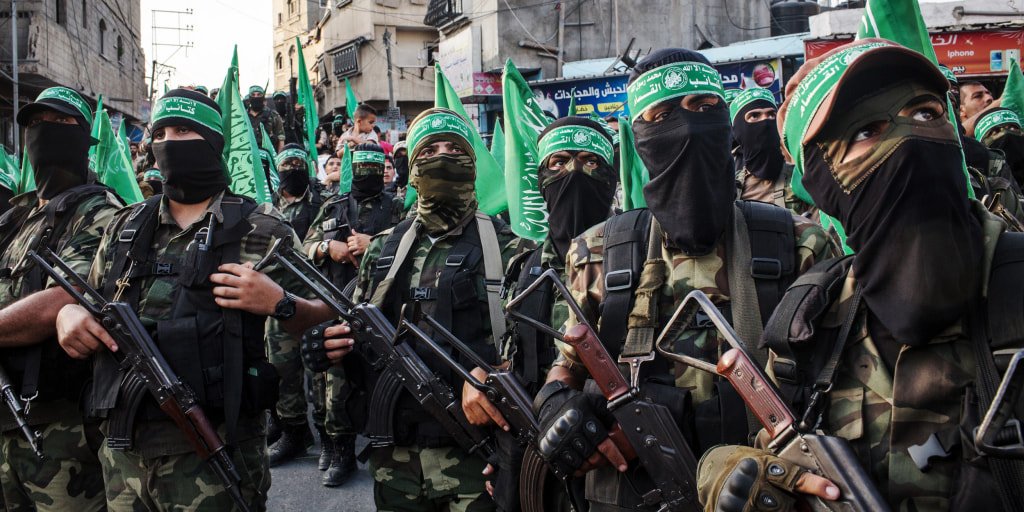
Hamas’s armed leadership has repeatedly linked any discussion of laying down weapons to a full Israeli withdrawal from Gaza and broader political guarantees, rather than offering an unconditional promise to disarm. Reuters reported in April that Hamas told mediators it would not even enter disarmament talks without assurances on a complete Israeli pullback, and later reporting from the BBC and other outlets said the group was still conditioning any next phase on Israel first meeting the terms of the ceasefire framework.[1][2]
That makes the current **0% yes** reading broadly consistent with the historical pattern: Hamas has treated disarmament as a bargaining chip tied to sovereignty, security guarantees, and a post-war political order, not as a stand-alone concession. Similar reporting from AP, the Jerusalem Post and the FDD has described Hamas rejecting phased decommissioning proposals, disputing the meaning of “disarmament”, and insisting on either a Palestinian state process or a full Israeli withdrawal before any weapon transfer is considered.[4][7][8][12]
The main catalyst to watch is whether the Board of Peace, or any mediator-backed framework, produces a formal Hamas statement on weapons before the market’s deadline; Reuters and AP both indicate that disarmament language is now embedded in the US-backed Gaza plan, but Hamas still says it wants prior Israeli commitments.[1][7] For traders, the relevant move would be a credible announcement from Hamas’s recognised leadership, not a third-party interpretation or a conditional leak, because the market only settles on an official commitment to disarm in Gaza.
Methodology
This page tracks Will Hamas agree to disarm by 2026? across four political prediction venues. Live odds come from the Polymarket order book (the deepest political prediction-market book). Kalshi is the CFTC-regulated US alternative, Betfair the established UK sports-exchange with politics markets, Manifold the open play-money variant. For users geo-blocked from Polymarket directly, brokers like Trump Prediction provide a 0%-fee route into the same order book.
Resolution & payout
For political markets the resolution source is decisive. Polymarket defines a concrete source per contract (e.g. AP, Reuters, official electoral commission) and uses the UMA Optimistic Oracle as the on-chain dispute mechanism. With a clearly defined outcome the USDC payout lands within minutes of the final confirmation.
FAQ
- How accurate are political prediction markets?
- Historically more accurate than polls. Polymarket's Brier score on US 2024 elections was ~0.11 — better than 538 (~0.14) and every mainstream poll. Markets aggregate information with real skin in the game.
- What resolution source is used for elections?
- Polymarket defines the source per contract — usually Associated Press (AP Race Call), Reuters or the official electoral commission. The source is stated in contract details before the market opens.
- Can prediction markets influence election outcomes?
- Markets reflect expectations rather than create them. Studies show public-facing markets can anchor expectations, but don't influence the underlying outcome. Political markets are information, not advocacy.
- Why do Polymarket and Kalshi differ on elections?
- Kalshi must follow CFTC compliance — strict definitions, clear resolution sources, US citizens only with KYC. Polymarket operates globally without CFTC oversight — deeper liquidity, but also higher regulatory risk.
- Which political events have the biggest volume?
- US Presidential election, party nominations (DNC/RNC), Senate majorities, individual state outcomes (Pennsylvania, Michigan, Wisconsin), and major European elections. Peak markets reach $50-500M per event.
%22%2F%3E%3Cpath%20d%3D%22M%206%2066%20A%2026%2026%200%200%201%2058%2066%22%20fill%3D%22%23E6B98D%22%20opacity%3D%220.9%22%2F%3E%3Ccircle%20cx%3D%2232%22%20cy%3D%2226%22%20r%3D%2222%22%20fill%3D%22%23F5CBA7%22%2F%3E%3Crect%20x%3D%2210%22%20y%3D%224%22%20width%3D%2244%22%20height%3D%2214%22%20rx%3D%227%22%20fill%3D%22%23fbbf24%22%20opacity%3D%220.9%22%2F%3E%3Crect%20x%3D%228%22%20%20y%3D%2218%22%20width%3D%228%22%20%20height%3D%2218%22%20rx%3D%224%22%20fill%3D%22%23fbbf24%22%20opacity%3D%220.7%22%2F%3E%3Crect%20x%3D%2248%22%20y%3D%2218%22%20width%3D%228%22%20%20height%3D%2218%22%20rx%3D%224%22%20fill%3D%22%23fbbf24%22%20opacity%3D%220.7%22%2F%3E%3C%2Fsvg%3E) and
and%22%2F%3E%3Cpath%20d%3D%22M%206%2066%20A%2026%2026%200%200%201%2058%2066%22%20fill%3D%22%23E6B98D%22%20opacity%3D%220.9%22%2F%3E%3Ccircle%20cx%3D%2232%22%20cy%3D%2226%22%20r%3D%2222%22%20fill%3D%22%23F5CBA7%22%2F%3E%3Cpath%20d%3D%22M%2010%2018%20Q%2016%204%2026%2010%20Q%2020%202%2032%206%20Q%2044%202%2038%2010%20Q%2048%204%2054%2018%22%20stroke%3D%22%23fbbf24%22%20stroke-width%3D%224%22%20fill%3D%22none%22%20stroke-linecap%3D%22round%22%2F%3E%3C%2Fsvg%3E)
Trade Will Hamas agree to disarm by 2026? on Trump Prediction
Live order book, 0% fees, USDC settlement in seconds.
Open live market →