Platform comparison
| Platform | YES odds | NO odds | Fee | KYC | Settlement | |
|---|---|---|---|---|---|---|
Polymarket (via Trump Prediction) Pick polygram.ink (preferred broker) |
8% | 92% | 0% (USDC on-chain) | No-KYC up to $1,500 | USDC, auto via UMA oracle | Live odds → |
Polymarket (direct) polymarket.com |
8% | 92% | 0% | Geo-blocked in US/UK/EU | USDC, on-chain | Live odds → |
Kalshi kalshi.com |
— | — | Up to 7% per trade | US-only, KYC required | USD | Live odds → |
Betfair Exchange betfair.com |
— | — | 2-5% commission | Full KYC from first trade | GBP / EUR | Live odds → |
Manifold Markets manifold.markets |
— | — | Play-money (mana) | None — play-money | Mana (no cash-out) | Live odds → |
Market context
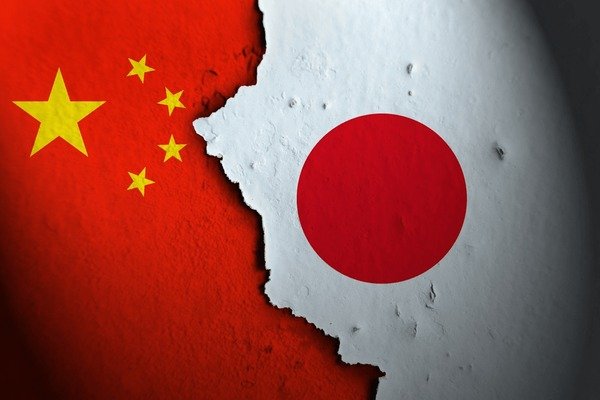
A direct military clash between China and Japan remains unlikely despite a sharp escalation in hostile incidents since November 2025, when Japanese Prime Minister Sanae Takaichi declared a Chinese attack on Taiwan could constitute an existential threat to Japan[4]. This statement triggered Beijing’s most aggressive pressure campaign in decades, including export bans on dual-use items to 40 Japanese firms, the detention of Japanese businessmen, and joint bomber patrols with Russia near Japanese airspace[1][2]. Recent radar-lock incidents by Chinese fighter jets on Japanese aircraft near Okinawa represent the closest military confrontation between the two nations in years, yet no shots have been fired or missiles launched[3][12].
Historical precedents suggest that while radar locks and coast guard incursions near the Senkaku/Diaoyu islands are now routine, they rarely escalate to open combat unless a clear kinetic strike occurs[5]. The current 8% probability reflects trader recognition that both sides actively avoid war despite mutual suspicion of preparation for it[8]. The market is leaning on the upcoming APEC summit in Shenzhen this November, where Takaichi and Xi Jinping are expected to meet for potential rapprochement[2]. Traders should monitor scheduled defence declarations, any new Japanese missile deployments with ranges reaching mainland China, and US diplomatic responses to radar incidents, as these catalysts could shift the risk profile significantly[8][12].
Methodology
This page tracks China x Japan military clash before 2027? across four political prediction venues. Live odds come from the Polymarket order book (the deepest political prediction-market book). Kalshi is the CFTC-regulated US alternative, Betfair the established UK sports-exchange with politics markets, Manifold the open play-money variant. For users geo-blocked from Polymarket directly, brokers like Trump Prediction provide a 0%-fee route into the same order book.
Resolution & payout
Political markets typically settle on official candidate or agency confirmation. Polymarket uses UMA Optimistic Oracle: a proposer posts the outcome with a bond, the two-hour window opens, then the smart contract pays USDC.
Kalshi settles USD via CFTC clearinghouse, with clearly defined resolution sources (e.g. AP race calls for elections). Betfair settles after the official outcome is registered with the league or agency. Manifold is play-money.
FAQ
- What resolution source is used for elections?
- Polymarket defines the source per contract — usually Associated Press (AP Race Call), Reuters or the official electoral commission. The source is stated in contract details before the market opens.
- Which platform has the deepest political liquidity?
- Polymarket — by far. US 2024 presidential volume was ~$3.5B vs Kalshi (~$200M) and Betfair (~$120M). Where Polymarket is geo-blocked, brokers like Trump Prediction route into the same order book at 0% fees.
- How fast do political markets react to news?
- High-liquidity markets move within seconds to minutes. A Trump tweet on the economy can shift the "Trump 2024" market 2-5 points before mainstream media has written anything.
- Why do Polymarket and Kalshi differ on elections?
- Kalshi must follow CFTC compliance — strict definitions, clear resolution sources, US citizens only with KYC. Polymarket operates globally without CFTC oversight — deeper liquidity, but also higher regulatory risk.
- Which political events have the biggest volume?
- US Presidential election, party nominations (DNC/RNC), Senate majorities, individual state outcomes (Pennsylvania, Michigan, Wisconsin), and major European elections. Peak markets reach $50-500M per event.
%22%2F%3E%3Cpath%20d%3D%22M%206%2066%20A%2026%2026%200%200%201%2058%2066%22%20fill%3D%22%23E6B98D%22%20opacity%3D%220.9%22%2F%3E%3Ccircle%20cx%3D%2232%22%20cy%3D%2226%22%20r%3D%2222%22%20fill%3D%22%23F5CBA7%22%2F%3E%3Crect%20x%3D%2210%22%20y%3D%224%22%20width%3D%2244%22%20height%3D%2214%22%20rx%3D%227%22%20fill%3D%22%23fbbf24%22%20opacity%3D%220.9%22%2F%3E%3Crect%20x%3D%228%22%20%20y%3D%2218%22%20width%3D%228%22%20%20height%3D%2218%22%20rx%3D%224%22%20fill%3D%22%23fbbf24%22%20opacity%3D%220.7%22%2F%3E%3Crect%20x%3D%2248%22%20y%3D%2218%22%20width%3D%228%22%20%20height%3D%2218%22%20rx%3D%224%22%20fill%3D%22%23fbbf24%22%20opacity%3D%220.7%22%2F%3E%3C%2Fsvg%3E) and
and%22%2F%3E%3Cpath%20d%3D%22M%206%2066%20A%2026%2026%200%200%201%2058%2066%22%20fill%3D%22%23E6B98D%22%20opacity%3D%220.9%22%2F%3E%3Ccircle%20cx%3D%2232%22%20cy%3D%2226%22%20r%3D%2222%22%20fill%3D%22%23F5CBA7%22%2F%3E%3Cpath%20d%3D%22M%2010%2018%20Q%2016%204%2026%2010%20Q%2020%202%2032%206%20Q%2044%202%2038%2010%20Q%2048%204%2054%2018%22%20stroke%3D%22%23fbbf24%22%20stroke-width%3D%224%22%20fill%3D%22none%22%20stroke-linecap%3D%22round%22%2F%3E%3C%2Fsvg%3E)
Trade China x Japan military clash before 2027? on Trump Prediction
Live order book, 0% fees, USDC settlement in seconds.
Open live market →