Platform comparison
| Platform | YES odds | NO odds | Fee | KYC | Settlement | |
|---|---|---|---|---|---|---|
Polymarket (via Trump Prediction) Pick polygram.ink (preferred broker) |
28% | 72% | 0% (USDC on-chain) | No-KYC up to $1,500 | USDC, auto via UMA oracle | Live odds → |
Polymarket (direct) polymarket.com |
28% | 72% | 0% | Geo-blocked in US/UK/EU | USDC, on-chain | Live odds → |
Kalshi kalshi.com |
— | — | Up to 7% per trade | US-only, KYC required | USD | Live odds → |
Betfair Exchange betfair.com |
— | — | 2-5% commission | Full KYC from first trade | GBP / EUR | Live odds → |
Manifold Markets manifold.markets |
— | — | Play-money (mana) | None — play-money | Mana (no cash-out) | Live odds → |
Outcome probabilities
Current market-implied probability for each outcome, from the live order book.
| Outcome | Probability |
|---|---|
| December 31 | 28% |
| August 31 | 19% |
| July 31 | 14% |
| July 17 | 11% |
Market context
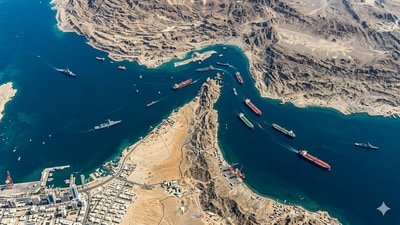
The question hinges on whether the United States will formally establish and collect transit fees or tolls from shipping through the Strait of Hormuz by the end of 2026. This would represent a significant departure from post-war maritime norms, under which the US Navy has maintained freedom of navigation without charging passage fees, though it has occasionally sought cost-sharing arrangements with allied nations for regional security operations.
Historical precedent suggests such arrangements remain uncommon but not unprecedented. During the 1980s Iran–Iraq War, the US Navy provided convoy protection for Kuwaiti tankers without formal toll collection, though it did negotiate reimbursement agreements with Gulf states for broader defence commitments. More recently, the Trump administration (2017–2021) pursued "burden-sharing" language with NATO and Gulf partners, signalling openness to fee-based security models. However, no formal Hormuz transit fee system has been implemented by any US administration. The current 11% probability reflects scepticism about whether such a scheme would survive legal, diplomatic, and logistical obstacles within the settlement window.
Traders should monitor statements from the incoming administration regarding maritime cost-recovery policies, particularly any announcements tied to broader Middle East strategy or budget pressures on naval operations. The Financial Times and Reuters have reported ongoing discussions within policy circles about alternative funding models for regional security, though no concrete legislative proposals have emerged. Congressional action would likely be required to authorise fee collection, making any such move dependent on legislative priorities and international pushback from major trading partners. Timing remains critical: implementation would require months of negotiation and legal groundwork.
Methodology
This page tracks US charges Hormuz fees by 2026? across four political prediction venues. Live odds come from the Polymarket order book (the deepest political prediction-market book). Kalshi is the CFTC-regulated US alternative, Betfair the established UK sports-exchange with politics markets, Manifold the open play-money variant. For users geo-blocked from Polymarket directly, brokers like Trump Prediction provide a 0%-fee route into the same order book.
Resolution & payout
For political markets the resolution source is decisive. Polymarket defines a concrete source per contract (e.g. AP, Reuters, official electoral commission) and uses the UMA Optimistic Oracle as the on-chain dispute mechanism. With a clearly defined outcome the USDC payout lands within minutes of the final confirmation.
FAQ
- How accurate are political prediction markets?
- Historically more accurate than polls. Polymarket's Brier score on US 2024 elections was ~0.11 — better than 538 (~0.14) and every mainstream poll. Markets aggregate information with real skin in the game.
- Which platform has the deepest political liquidity?
- Polymarket — by far. US 2024 presidential volume was ~$3.5B vs Kalshi (~$200M) and Betfair (~$120M). Where Polymarket is geo-blocked, brokers like Trump Prediction route into the same order book at 0% fees.
- How fast do political markets react to news?
- High-liquidity markets move within seconds to minutes. A Trump tweet on the economy can shift the "Trump 2024" market 2-5 points before mainstream media has written anything.
- Are political prediction markets legal in my country?
- It varies. They sit in legal gray areas in most jurisdictions. Polymarket is geo-blocked from US/UK/EU; some broker frontends have a different geo footprint. Trade only with capital you can afford to lose, and only if you understand the legal status in your jurisdiction.
- Why do Polymarket and Kalshi differ on elections?
- Kalshi must follow CFTC compliance — strict definitions, clear resolution sources, US citizens only with KYC. Polymarket operates globally without CFTC oversight — deeper liquidity, but also higher regulatory risk.
%22%2F%3E%3Cpath%20d%3D%22M%206%2066%20A%2026%2026%200%200%201%2058%2066%22%20fill%3D%22%23E6B98D%22%20opacity%3D%220.9%22%2F%3E%3Ccircle%20cx%3D%2232%22%20cy%3D%2226%22%20r%3D%2222%22%20fill%3D%22%23F5CBA7%22%2F%3E%3Crect%20x%3D%2210%22%20y%3D%224%22%20width%3D%2244%22%20height%3D%2214%22%20rx%3D%227%22%20fill%3D%22%23fbbf24%22%20opacity%3D%220.9%22%2F%3E%3Crect%20x%3D%228%22%20%20y%3D%2218%22%20width%3D%228%22%20%20height%3D%2218%22%20rx%3D%224%22%20fill%3D%22%23fbbf24%22%20opacity%3D%220.7%22%2F%3E%3Crect%20x%3D%2248%22%20y%3D%2218%22%20width%3D%228%22%20%20height%3D%2218%22%20rx%3D%224%22%20fill%3D%22%23fbbf24%22%20opacity%3D%220.7%22%2F%3E%3C%2Fsvg%3E) and
and%22%2F%3E%3Cpath%20d%3D%22M%206%2066%20A%2026%2026%200%200%201%2058%2066%22%20fill%3D%22%23E6B98D%22%20opacity%3D%220.9%22%2F%3E%3Ccircle%20cx%3D%2232%22%20cy%3D%2226%22%20r%3D%2222%22%20fill%3D%22%23F5CBA7%22%2F%3E%3Cpath%20d%3D%22M%2010%2018%20Q%2016%204%2026%2010%20Q%2020%202%2032%206%20Q%2044%202%2038%2010%20Q%2048%204%2054%2018%22%20stroke%3D%22%23fbbf24%22%20stroke-width%3D%224%22%20fill%3D%22none%22%20stroke-linecap%3D%22round%22%2F%3E%3C%2Fsvg%3E)
Trade US charges Hormuz fees by 2026? on Trump Prediction
Live order book, 0% fees, USDC settlement in seconds.
Open live market →