Platform comparison
| Platform | YES odds | NO odds | Fee | KYC | Settlement | |
|---|---|---|---|---|---|---|
Polymarket (via Trump Prediction) Pick polygram.ink (preferred broker) |
54% | 46% | 0% (USDC on-chain) | No-KYC up to $1,500 | USDC, auto via UMA oracle | Live odds → |
Polymarket (direct) polymarket.com |
54% | 46% | 0% | Geo-blocked in US/UK/EU | USDC, on-chain | Live odds → |
Kalshi kalshi.com |
— | — | Up to 7% per trade | US-only, KYC required | USD | Live odds → |
Betfair Exchange betfair.com |
— | — | 2-5% commission | Full KYC from first trade | GBP / EUR | Live odds → |
Manifold Markets manifold.markets |
— | — | Play-money (mana) | None — play-money | Mana (no cash-out) | Live odds → |
Outcome probabilities
Current market-implied probability for each outcome, from the live order book.
| Outcome | Probability |
|---|---|
| Troy Jackson | 54% |
| Candidate F | 50% |
| Candidate G | 50% |
| Candidate H | 50% |
| Candidate I | 50% |
| Candidate J | 50% |
| Other | 50% |
| Shenna Bellows | 27% |
| Nirav Shah | 13% |
| Dan Kleban | 3% |
| Janet Mills | 2% |
| Valli Geiger | 2% |
| Graham Platner | 1% |
| Jared Golden | 1% |
| Aaron Frey | 0% |
| Chellie Pingree | 0% |
| Jordan Wood | 0% |
| Paige Loud | 0% |
Market context
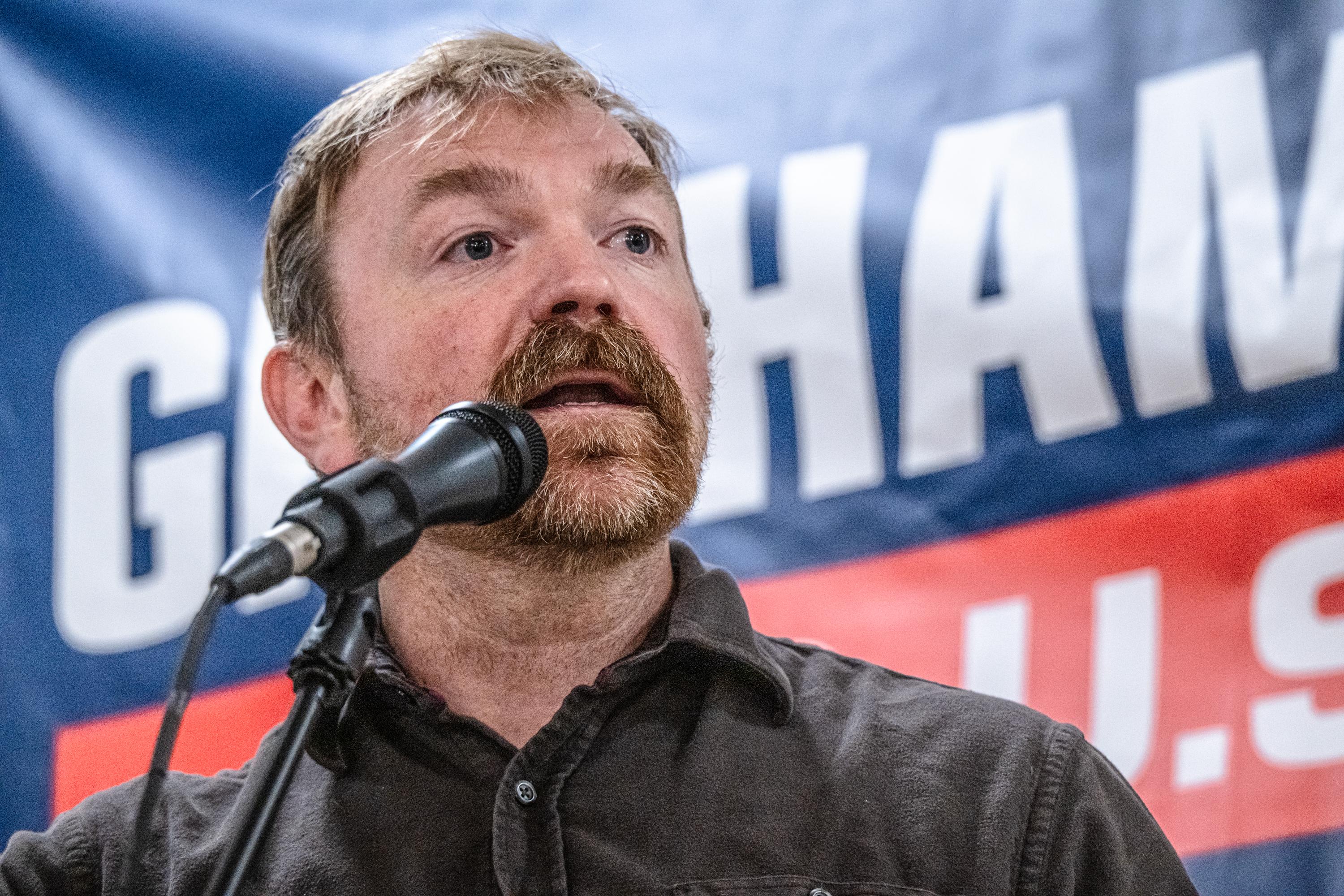
The real-world event driving this market is Graham Platner’s confirmed withdrawal from the 2026 Maine U.S. Senate race on Wednesday, following a sexual assault allegation that caused his Democratic support to evaporate. This leaves the Maine Democratic Party with a legally compressed window to nominate a replacement candidate by July 27, as state law bars new primaries but permits party-led succession if the withdrawal occurs before July 13 at 5 p.m. ET[1][5].
Historically, such rapid party replacements in high-stakes Senate races are rare but have occurred when nominees face disqualifying scandals, often resulting in internal conventions or committee votes rather than public primaries. Comparable cases, such as the 2018 Alabama Senate race where a nominee withdrew amid misconduct allegations, show that parties can successfully field new candidates within weeks, though the process is frequently chaotic and dominated by factional jockeying[2][4]. The current 1% market probability likely reflects uncertainty over whether the party will finalise a nominee before the deadline, not the impossibility of succession itself.
Traders should monitor three key catalysts: the official announcement of the nominating convention timeline by the Maine Democratic Party, the list of potential replacements circulating (including Shenna Bellows, Dan Kleban, and Hannah Pingree), and any further statements from Platner or party leaders regarding the selection process[1][4]. The market is leaning on the convention announcement as the primary catalyst, as NBC News reports the party has already decided to hold a convention to pick a replacement and plans to disclose the full timeline soon[1]. Without a confirmed nominee by July 27, the market resolves to Platner; with one, it resolves to the new candidate.
Methodology
Political prediction markets differ structurally from sports betting: thinner liquidity, longer settlement windows, higher sensitivity to single news events. This page shows the live Polymarket quote for Maine Democratic Senate nominee on July 27? plus platform attributes for the three reference venues, so you can see at a glance where the deepest market for this question sits.
Resolution & payout
For political markets the resolution source is decisive. Polymarket defines a concrete source per contract (e.g. AP, Reuters, official electoral commission) and uses the UMA Optimistic Oracle as the on-chain dispute mechanism. With a clearly defined outcome the USDC payout lands within minutes of the final confirmation.
FAQ
- What resolution source is used for elections?
- Polymarket defines the source per contract — usually Associated Press (AP Race Call), Reuters or the official electoral commission. The source is stated in contract details before the market opens.
- Can prediction markets influence election outcomes?
- Markets reflect expectations rather than create them. Studies show public-facing markets can anchor expectations, but don't influence the underlying outcome. Political markets are information, not advocacy.
- Which platform has the deepest political liquidity?
- Polymarket — by far. US 2024 presidential volume was ~$3.5B vs Kalshi (~$200M) and Betfair (~$120M). Where Polymarket is geo-blocked, brokers like Trump Prediction route into the same order book at 0% fees.
- How fast do political markets react to news?
- High-liquidity markets move within seconds to minutes. A Trump tweet on the economy can shift the "Trump 2024" market 2-5 points before mainstream media has written anything.
- Why do Polymarket and Kalshi differ on elections?
- Kalshi must follow CFTC compliance — strict definitions, clear resolution sources, US citizens only with KYC. Polymarket operates globally without CFTC oversight — deeper liquidity, but also higher regulatory risk.
%22%2F%3E%3Cpath%20d%3D%22M%206%2066%20A%2026%2026%200%200%201%2058%2066%22%20fill%3D%22%23E6B98D%22%20opacity%3D%220.9%22%2F%3E%3Ccircle%20cx%3D%2232%22%20cy%3D%2226%22%20r%3D%2222%22%20fill%3D%22%23F5CBA7%22%2F%3E%3Crect%20x%3D%2210%22%20y%3D%224%22%20width%3D%2244%22%20height%3D%2214%22%20rx%3D%227%22%20fill%3D%22%23fbbf24%22%20opacity%3D%220.9%22%2F%3E%3Crect%20x%3D%228%22%20%20y%3D%2218%22%20width%3D%228%22%20%20height%3D%2218%22%20rx%3D%224%22%20fill%3D%22%23fbbf24%22%20opacity%3D%220.7%22%2F%3E%3Crect%20x%3D%2248%22%20y%3D%2218%22%20width%3D%228%22%20%20height%3D%2218%22%20rx%3D%224%22%20fill%3D%22%23fbbf24%22%20opacity%3D%220.7%22%2F%3E%3C%2Fsvg%3E) and
and%22%2F%3E%3Cpath%20d%3D%22M%206%2066%20A%2026%2026%200%200%201%2058%2066%22%20fill%3D%22%23E6B98D%22%20opacity%3D%220.9%22%2F%3E%3Ccircle%20cx%3D%2232%22%20cy%3D%2226%22%20r%3D%2222%22%20fill%3D%22%23F5CBA7%22%2F%3E%3Cpath%20d%3D%22M%2010%2018%20Q%2016%204%2026%2010%20Q%2020%202%2032%206%20Q%2044%202%2038%2010%20Q%2048%204%2054%2018%22%20stroke%3D%22%23fbbf24%22%20stroke-width%3D%224%22%20fill%3D%22none%22%20stroke-linecap%3D%22round%22%2F%3E%3C%2Fsvg%3E)
Trade Maine Democratic Senate nominee on July 27? on Trump Prediction
Live order book, 0% fees, USDC settlement in seconds.
Open live market →